

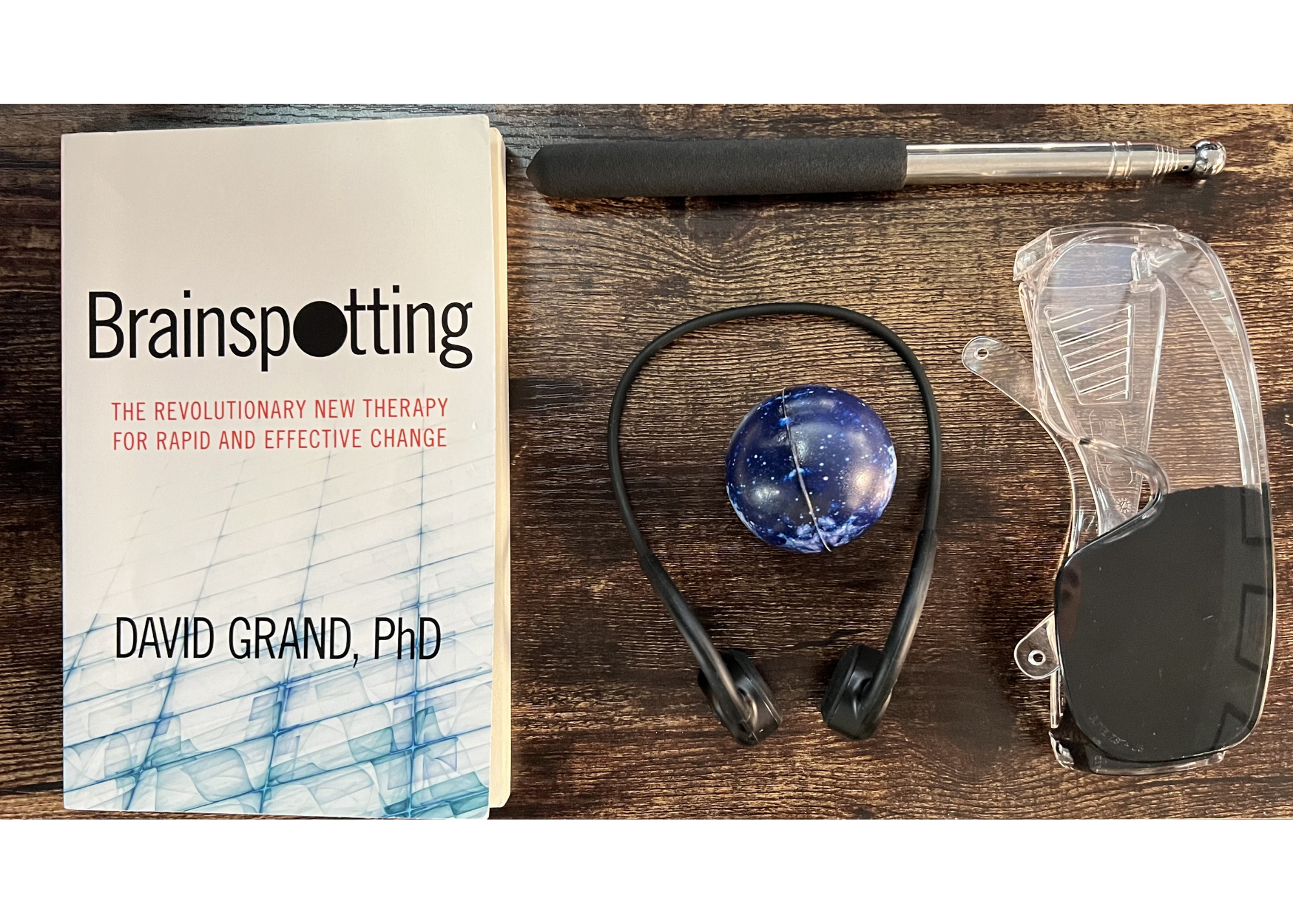
What is brain spotting?
(BSP) is a relatively new type of therapy designed by Dr. David Grand to help people access, process, and overcome trauma, negative emotions, and pain, including psychologically induced physical pain.
How does brainspotting work?
Therapists slowly guide the eyes of people in the therapy across the field of vision to find appropriate "brain spots" that activates a traumatic memory or painful emotion. Brain spotting seems to activate the body's innate ability to heal itself from trauma. This happens while therapists use something called "dual attunement."
What does a normal brain spotting session look like?
1.) The therapist will build rapport first
2.) Relaxation techniques or guided imagery may be used
3.) You will be invited to speak about things that upset you, a memory or collection of memories typically.
4.) You will be asked to identify where you feel the feelings in your body
5.) A pointer will be used
6.) You will focus on one spot for the duration of the session
7.) You will be encouraged to accept, explore, or be curious about feelings that come up
8.) Your body will process the trauma
9.) The therapist will assist you in processing the trauma and hold space for you through attunement.
Interested in Learning More?
It is important to understand that brainspotting therapy is different than traditional talk therapy. Once the spot is located, you continue to focus on the specific area of concern while keeping your gaze focused. The therapists' job is to allow the space for your brain and body to do the work. You can talk as much or as little as you would like during this process either keeping the processing internal or sharing verbal as things come up; however the therapist will likely speak very little except when they check in with you from time to time to see what is happening in your body.