

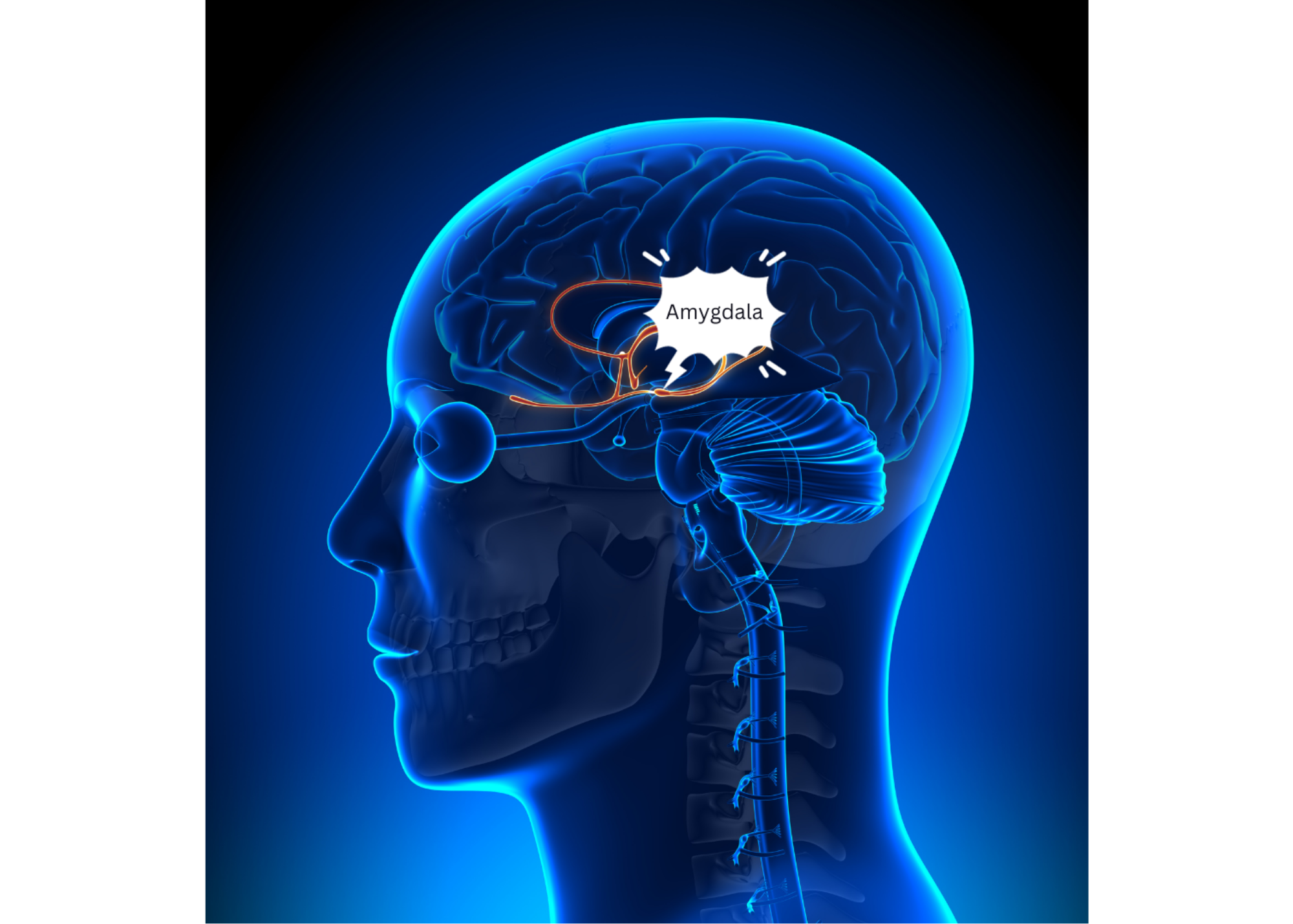
How trauma impacts the brain
During trauma, the amygdala (the region of the brain responsible for processing emotions) goes into overdrive and the trauma becomes stuck in the body, resulting in both physical and mental illnesses.
This creates the fight, flight, freeze, fawn, friend, or flop response - and frequent entrance into this dysregulated mindset can result in long-term physical and emotional consequences.
Often described as a "frozen, maladaptive homeostasis", the "stuck traumas" are accessed during brainspotting in an attempt to integrate the interrupted processing of the trauma.
So how does brain spotting impact trauma?
The purpose of brainspotting is to release the trauma stored in the body and allow the brain to reorganize in such a way that the client has more and faster access to healing.
Brainspotting allows the client to bypass their own conscious mind and instead allows them to access their deep levels of their unconscious mind.
This allows for the release of emotional trauma that the client may be unaware of as it is located in their subconscious.